Before the entrances and championship belts
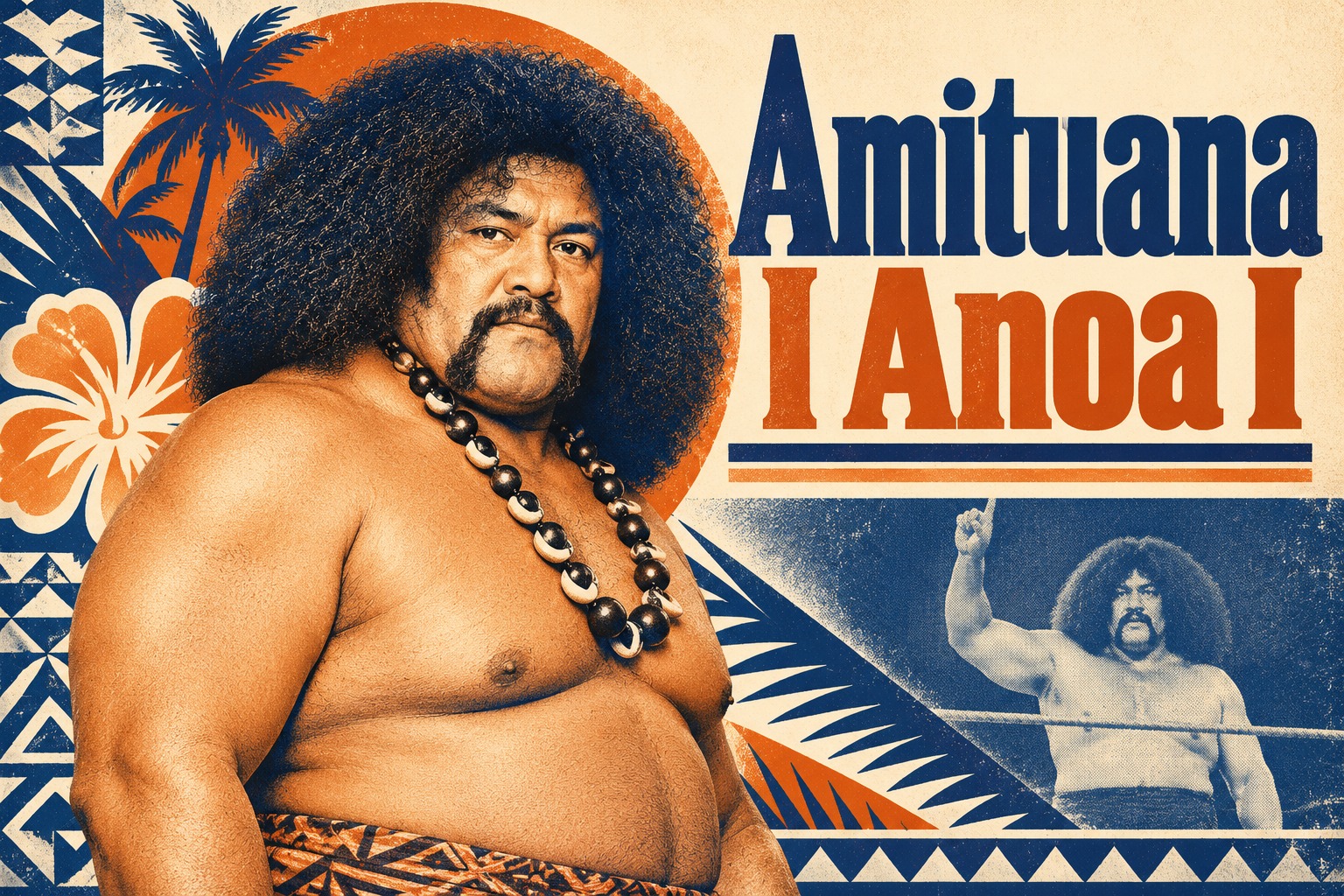
Reverend Amituana’i Anoa’i belongs near the beginning of a family story that wrestling audiences encounter through very different images: arena lights, championship matches, and generations of performers sharing a recognizable surname. His own public identity was that of a religious and family elder. He was not the star of the wrestling promotions that would later make his descendants famous.
I find that separation useful. Calling him a patriarch explains his place in the family, but it should not turn his life into an imaginary wrestling career. His importance lies in the relationships and community foundations that preceded the spectacle. The family tree grew before it became part of entertainment history.
American Samoa and a new community
Amituana’i’s life is generally dated from around 1914 to 1994, with his origins in American Samoa. Exact details of his early years are limited. His marriage to Tovaleomanaia Leoso Ripley is a central part of the established family account, and together they raised the generation that included Afa and Sika Anoa’i.
The family later relocated to San Francisco. Amituana’i is associated with helping establish the First Congregational Christian Church of American Samoa there. That role places him in a community setting broader than the sporting fame that followed. A church can serve as a place of worship while also helping families preserve language, relationships, and shared traditions after migration.
The meaningful point is already clear: the family’s American story involved religious and community work as well as the professional opportunities later pursued by its children.
Tovaleomanaia and the household behind the dynasty
Tovaleomanaia’s place deserves more than a passing mention beside her husband’s name. She was the mother of the generation through which so much of the family’s later wrestling history developed. Yet the detailed public narrative of her own life is sparse, as it is for many women in family histories organized around male performers.
The exact number of children in Amituana’i and Tovaleomanaia’s household varies across family accounts. Afa and Sika are firmly established sons; a complete roster of every sibling, with consistent spellings and dates, is less securely available here.
That uncertainty does not weaken the family’s identity. It simply means that a celebratory wrestling family diagram and a fully documented genealogy are different things. A responsible account can acknowledge the large household without pretending every branch has been equally recorded.
Afa and Sika become the Wild Samoans
Afa Anoa’i and Sika Anoa’i became widely known as the Wild Samoans. Their tag team career gave the family a powerful foothold in professional wrestling and later brought recognition in the WWE Hall of Fame. For audiences, their names became inseparable from a distinctive wrestling act. Within the family, they were also sons, brothers, fathers, and uncles.
Both died in 2024. Their deaths prompted renewed attention to the generations that followed them and to the elder family members who came before. I see their story as a bridge: one end reaches back to Amituana’i and Tovaleomanaia, while the other reaches toward wrestlers whose careers unfolded on a much larger global stage.
Afa’s children include wrestlers Samu, Lloyd Anoa’i, and Afa Jr. Sika’s sons included Matthew Anoa’i, known professionally as Rosey, and Leati Joseph Anoa’i, known as Roman Reigns. These direct relationships are more helpful than the loose habit of calling every performer a cousin without explaining why.
The next generations in the ring
Roman Reigns became one of WWE’s most prominent performers. His older brother Rosey also had a professional wrestling career and died in 2017. Both are Amituana’i’s grandsons through Sika, making their position in this branch of the family straightforward.
Elsewhere in the wider dynasty are names such as Yokozuna, Rikishi, Umaga, the Usos, Jacob Fatu, and Solo Sikoa. They belong to different branches and generations. Their shared connection does not mean they all have the same relationship to Amituana’i or to one another.
I find this generational depth more interesting than a simple parade of famous names. A family can pass along familiarity with a profession, experienced relatives, and a sense of belonging within it. Each wrestler still develops an individual career, with particular skills, decisions, and achievements. The family name opens a historical conversation; it does not write every match.
Peter Maivia and the meaning of brotherhood
Amituana’i’s bond with Peter Maivia is central to understanding why the Anoa’i and Maivia families are discussed together. The two men were regarded as blood brothers, a relationship understood as a cultural and familial bond. It should not be mistaken for proof that they were biological brothers.
That distinction helps explain the wider connection to Dwayne Johnson, known as The Rock, through the Maivia family. Rocky Johnson and the Maivia branch have their own genealogy. Their place in the broader family network does not make every member a direct biological descendant of Amituana’i.
Nor does cultural kinship become less meaningful when it is distinguished from genetic descent. I see no need to diminish the bond in order to describe it accurately. The mistake lies in treating two different kinds of relationship as though they were the same claim.
FAQ
Was Amituana’i Anoa’i a professional wrestler?
His established public role was as a reverend, community elder, and family patriarch. The famous wrestling careers belong to his sons and later generations. Afa and Sika’s championships and Hall of Fame recognition should not be listed as his personal sporting achievements.
How was he related to Roman Reigns?
Roman Reigns is the son of Sika Anoa’i, who was Amituana’i’s son. That makes Amituana’i Roman’s grandfather. Rosey, Roman’s older brother, belonged to the same direct family branch.
Was Peter Maivia his biological brother?
Their widely recognized relationship was a bond of brotherhood rather than established biological siblinghood. It connected their families culturally and socially, which is why the Maivia and Anoa’i names often appear together in wrestling history.
Is Amituana’i’s personal wealth known?
His net worth is not publicly established. Earnings and wealth estimates attached to famous descendants do not describe the finances of a religious elder from an earlier generation, and there is no reliable basis here for assigning him a personal fortune.